AnxietyAidTools

Evidence-based mental health tools
10 min

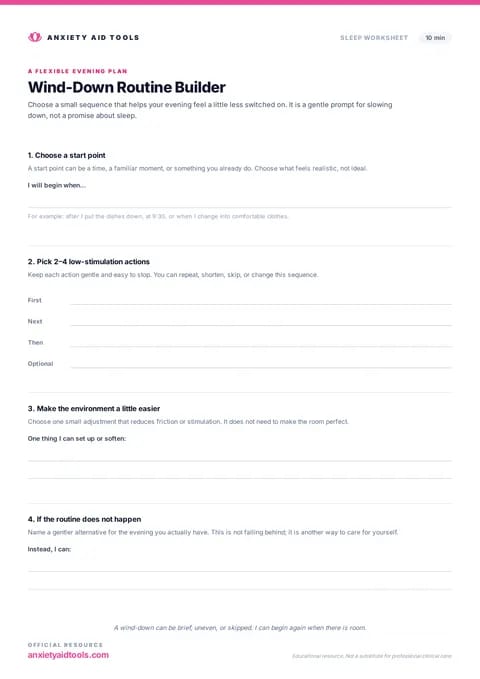
Wind-Down Routine Builder

Create a small, flexible evening sequence that makes slowing down feel a little easier.

Sleep
Beginner
10 min
Wind-Down Routine Builder
Pro download PDF & PNG

Overview

Print for offline use during therapy or self-practice

Printable PDF and PNG formats available in your Pro dashboard

When to Use

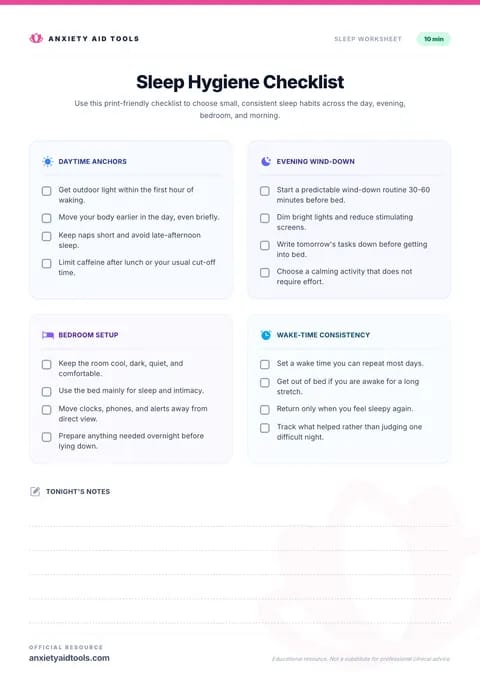
  • When evenings feel abrupt or over-stimulating
  • When you want a small transition into rest, not a strict bedtime system
  • When a long routine feels unrealistic or pressuring
  • Before trying one gentle environmental adjustment

How to Use

  1. 1
    Choose a starting point that already happens most evenings, or choose a time that feels forgiving.
  2. 2
    Write two to four low-stimulation actions in an order that feels natural to you.
  3. 3
    Pick one small environmental change that lowers friction or stimulation.
  4. 4
    Name a gentler alternative for nights when the full sequence does not happen.
  5. 5
    Return to the plan when it helps, and revise it when it does not fit your life.

The Wind-Down Routine Builder helps you make a short sequence of familiar, low-stimulation actions for the transition into your evening. The aim is not to complete a perfect routine or make sleep happen on command. It is simply to give yourself a softer place to begin.

You choose a starting point, then write two to four actions that feel realistic for the night you are likely to have. They can be very small: dimming one light, changing into comfortable clothes, setting a phone aside, reading a few pages, or sitting quietly with a drink. The sequence can be shortened, changed, or skipped.

The worksheet also makes room for one environmental adjustment and a gentler alternative when the routine does not happen. That fallback matters: a missed routine is not a failure or something to catch up on. It is information about the evening you had.
Research & References

  • Edinger, J. D., et al. (2021). Behavioral and psychological treatments for chronic insomnia disorder in adults: An American Academy of Sleep Medicine clinical practice guideline. Journal of Clinical Sleep Medicine, 17(2), 255-262.
  • National Heart, Lung, and Blood Institute (2022). Healthy Sleep Habits. National Institutes of Health.