Late-night worry often feels urgent because the bedroom is quiet and free of daytime distractions. When thoughts race at bedtime, the brain can begin to associate being in bed with problem-solving, vigilance, and frustration rather than rest.
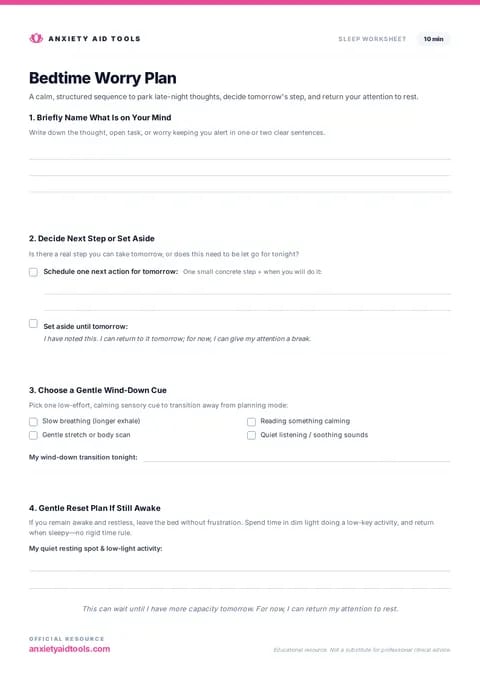
The Bedtime Worry Plan provides an intentional cognitive container rooted in CBT-I (Cognitive Behavioral Therapy for Insomnia) and stimulus control principles. Writing thoughts down relieves working memory and signals to your nervous system that unresolved issues are safely recorded.
Using a calm, low-pressure four-step sequence, this worksheet helps you briefly name what is on your mind, decide whether there is a single concrete action to schedule for tomorrow or if the worry can be set aside, pick a sensory wind-down cue, and follow a gentle reset plan if you remain awake.
Use this sheet before bed or at a quiet table outside the bedroom to preserve your bed as a sanctuary for sleep.