AnxietyAidTools

Evidence-based mental health tools
Self-Paced

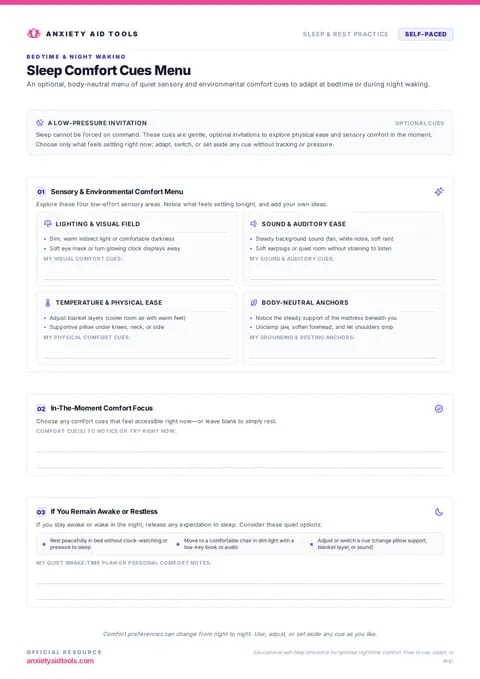
Sleep Comfort Cues Menu

An optional, body-neutral menu of quiet environmental and sensory comfort cues to choose, notice, or adjust in the moment at bedtime or during night waking.

Sleep
Beginner
Self-Paced
Sleep Comfort Cues Menu
Pro download PDF & PNG

Overview

Print for offline use during therapy or self-practice

Printable PDF and PNG formats available in your Pro dashboard

When to Use

  • At bedtime when exploring optional comfort cues for rest
  • During night waking when you want low-stimulation physical or environmental comfort without turning on bright lights
  • When feeling sensory friction or restlessness in bed (such as lighting, temperature, noise, or uncomfortable posture)
  • When you want a low-pressure menu instead of a rigid routine or sleep tracking system

How to Use

  1. 1
    Keep this menu near your bed or quiet resting space as an optional in-the-moment reference.
  2. 2
    Browse the four sensory comfort categories: lighting/visuals, sound, temperature/physical ease, and body-neutral anchors.
  3. 3
    Choose optional comfort cues that feel accessible right now; skip anything you prefer not to use.
  4. 4
    If you remain awake or feel restless, consider resting quietly without expecting sleep or moving to a comfortable chair with dim light.
  5. 5
    Remember that preferences can change; you are free to adapt, switch, or set aside any cue at any time.

The Sleep Comfort Cues Menu is a quiet, low-demand reference for choosing environmental and body-neutral comfort cues at bedtime or during night awakenings. Rather than requiring a rigid sequence, forced sleep tracking, or sleep promises, it provides a flexible menu of sensory and physical options you can try, adjust, or set aside in the moment.

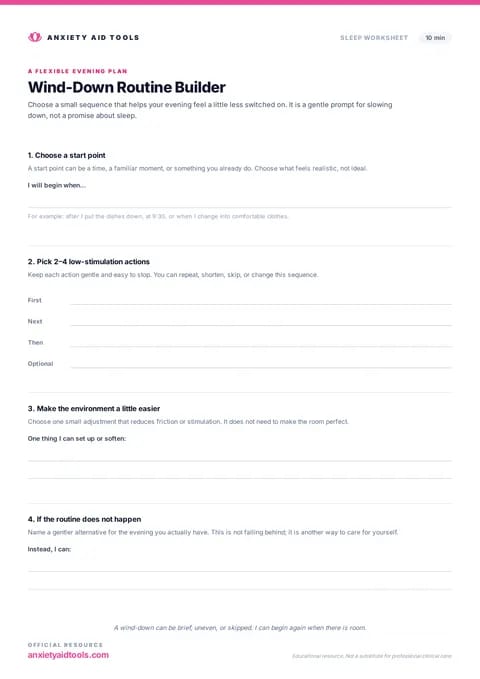
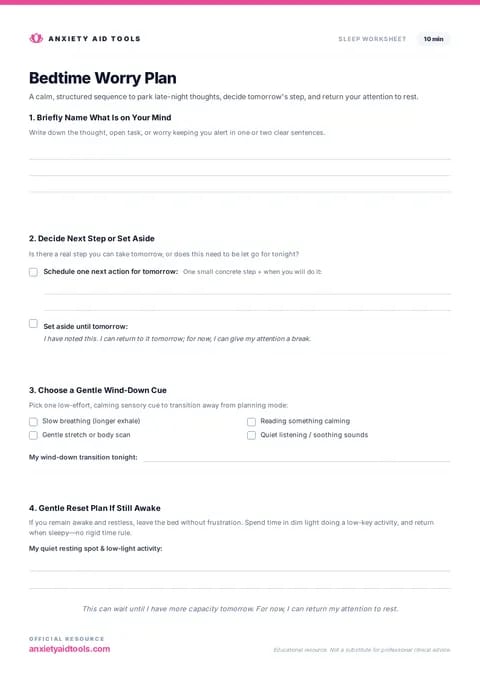
This worksheet complements existing sleep tools without duplicating them: while the Bedtime Worry Plan triages racing cognitive worries, the Wind-Down Routine Builder plans a structured evening sequence, the Sleep Diary tracks retrospective sleep patterns, and the Sleep Hygiene Checklist audits broad daily habits, this menu is designed strictly for immediate, low-pressure sensory comfort when settling into bed or waking up in the night.

Sleep cannot be forced on command. These cues are invitations to explore bodily ease and sensory comfort without pressure. If a cue does not feel settling, you have full permission to change it, stop, or simply rest quietly without trying to achieve sleep.
Research & References

  • Bootzin, R. R., & Perlis, M. L. (1992). Nonpharmacologic treatments of insomnia. Journal of Clinical Psychiatry, 53, 37-41.
  • Edinger, J. D., et al. (2021). Behavioral and psychological treatments for chronic insomnia disorder in adults: An American Academy of Sleep Medicine clinical practice guideline. Journal of Clinical Sleep Medicine, 17(2), 255-262.