AnxietyAidTools

Evidence-based mental health tools
Self-paced / Optional

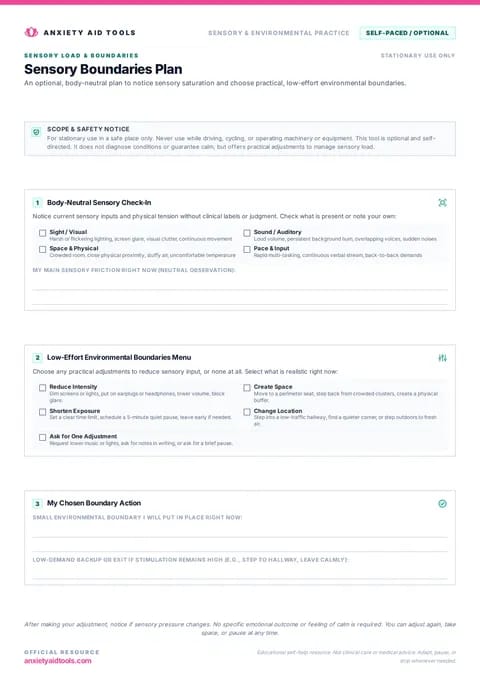
Sensory Boundaries Plan

An optional, body-neutral plan for noticing sensory saturation and choosing practical, low-effort environmental boundaries.

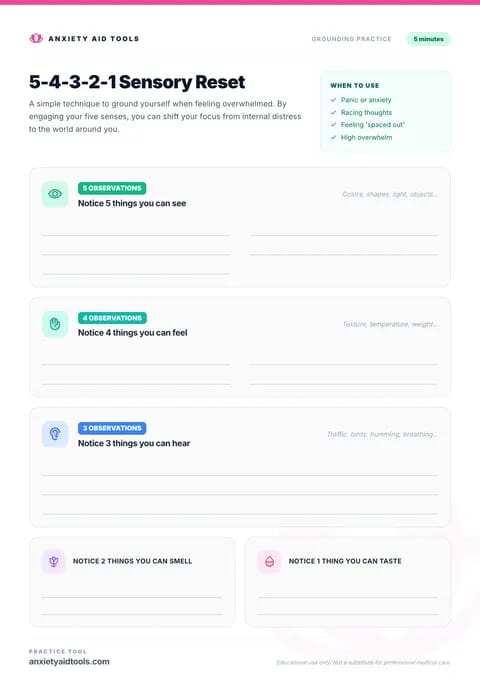
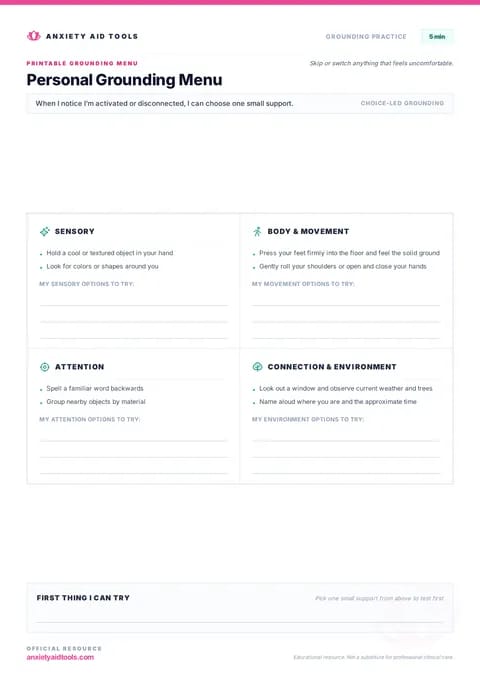
Grounding
Beginner
Self-paced / Optional
Sensory Boundaries Plan
Pro download PDF & PNG

Overview

Print for offline use during therapy or self-practice

Printable PDF and PNG formats available in your Pro dashboard

When to Use

  • When lighting, sound, crowding, temperature, or pace feels hard to manage
  • Before or during a situation where you want to plan a small environmental boundary
  • When you want a body-neutral check-in without diagnosing or judging your response
  • When choosing a low-demand backup or exit if stimulation remains high

How to Use

  1. 1
    Notice current sensory inputs and physical tension using neutral words; check one or more areas or write your own observation.
  2. 2
    Choose any practical adjustments, or none at all, such as reducing intensity, creating space, or changing location.
  3. 3
    Write the small environmental boundary you will put in place right now.
  4. 4
    Name a low-demand backup or exit if stimulation remains high; stepping away or leaving calmly is allowed when safe and practical.
  5. 5
    After the adjustment, notice whether sensory pressure changes without requiring calm or any other specific feeling.

The Sensory Boundaries Plan is an optional, body-neutral worksheet for noticing sensory inputs and physical tension without clinical labels or judgment. It does not diagnose conditions or promise a specific emotional outcome.

Use the brief check-in to identify visual, auditory, spatial, or pacing friction, then choose any realistic environmental adjustments, or none at all. Options include reducing intensity, creating space, shortening exposure, changing location, or asking for one adjustment.

The plan is for stationary use in a safe place only. Choose what is practical, adapt or skip any part, and use a low-demand backup or exit when stimulation remains high.
Research & References

  • Dunn, W. (1997). The impact of sensory processing abilities on the daily lives of young children and their families: A conceptual model. Infants & Young Children, 9(4), 23-35.
  • Substance Abuse and Mental Health Services Administration (2014). Trauma-Informed Care in Behavioral Health Services. Treatment Improvement Protocol (TIP) Series, No. 57.