AnxietyAidTools

Evidence-based mental health tools
Self-paced / Optional

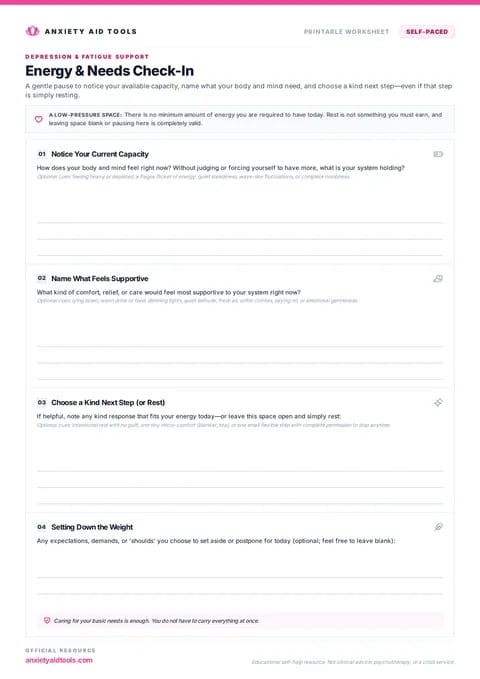
Energy & Needs Check-In

A low-pressure, no-ratings, no-quota companion for noticing available energy, gently naming needs, and choosing flexible rest or a kind next step.

Mood & Depression
Beginner
Self-paced / Optional
Energy & Needs Check-In
Pro download PDF & PNG

Overview

Print for offline use during therapy or self-practice

Printable PDF and PNG formats available in your Pro dashboard

When to Use

  • When you want to notice your available energy without rating or measuring it
  • When low energy, fatigue, or overwhelm makes it hard to name what would feel supportive
  • When choosing between rest, comfort, space, or a kind next step
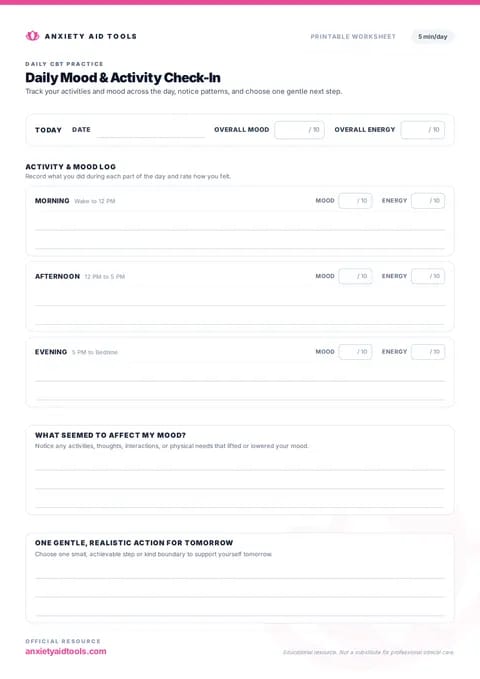
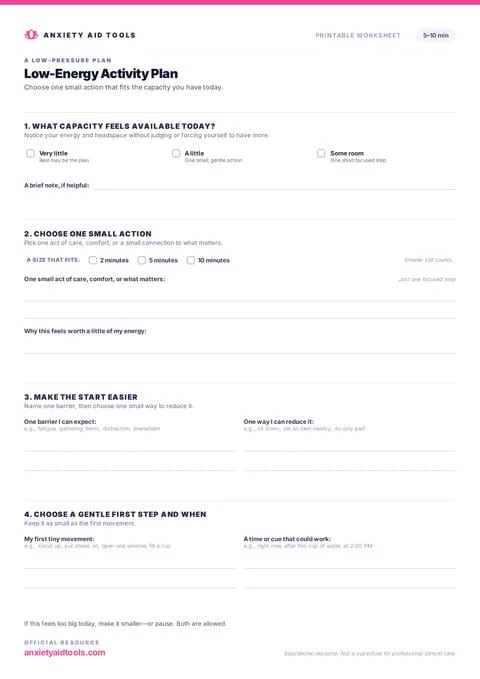
  • Alongside the Daily Mood & Activity Check-In or Low-Energy Activity Plan when you want a gentler companion rather than a log or timed plan

How to Use

  1. 1
    Notice your current energy using neutral words; no rating is required.
  2. 2
    Gently name a physical, sensory, emotional, or pacing need.
  3. 3
    Choose what fits the energy you actually have: flexible rest, a small comfort, or a kind next step.
  4. 4
    Write one gentle choice, or leave it blank; there is no quota to complete.
  5. 5
    Use the Daily Mood & Activity Check-In to record activities, or the Low-Energy Activity Plan when you want to choose a timed action.

The Energy & Needs Check-In is a low-pressure companion to the Daily Mood & Activity Check-In and Low-Energy Activity Plan. It helps you notice the energy you have available and gently name what your body or mind may need, without asking you to record activities or schedule a timed action.

Use the page without ratings or quotas. You can name a physical, sensory, emotional, or pacing need, then choose flexible rest, a small comfort, or a kind next step—or choose nothing more for now.

Unlike the Daily Mood & Activity Check-In, this is not an activity log. Unlike the Low-Energy Activity Plan, it does not ask you to choose a timed action. It keeps the choice flexible and optional, including the choice to rest.
Research & References

  • Neff, K. D. (2003). Self-compassion: An alternative conceptualization of a healthy attitude toward oneself. Self and Identity, 2(2), 85-101.
  • Centre for Clinical Interventions (2022). Back from the Bluez: Behavioural Strategies. CCI Self-Help Resources.