AnxietyAidTools

Evidence-based mental health tools
10 min

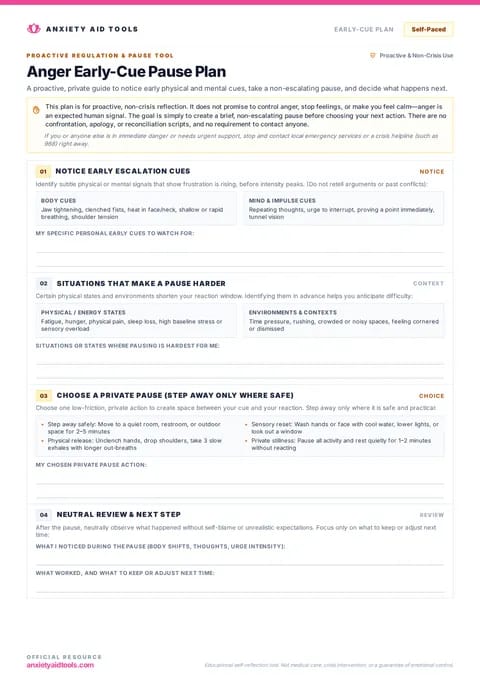
Anger Early-Cue Pause Plan

A proactive, non-crisis worksheet for noticing personal early escalation cues, choosing a private non-escalating pause, and reviewing what to keep or adjust without retelling conflict.

Mood & Depression
Beginner
10 min
Anger Early-Cue Pause Plan
Pro download PDF & PNG

Overview

Print for offline use during therapy or self-practice

Printable PDF and PNG formats available in your Pro dashboard

When to Use

  • During a calm moment when you want to identify early physical or mental cues before anger peaks
  • When recurring situations or personal states make it harder to pause
  • When you want a private, non-escalating pause before choosing what to do next
  • After a pause, when you want a neutral review of what you noticed and what to adjust

How to Use

  1. 1
    Name your personal early body and mind cues without retelling detailed conflict or past arguments.
  2. 2
    Note physical states and settings that can narrow your reaction window, without treating them as a diagnosis.
  3. 3
    Choose one private, non-escalating pause; step away only where it is safe and practical.
  4. 4
    After the pause, review what you noticed without self-blame, a control promise, or an expectation that anger must disappear.
  5. 5
    Choose what to keep or adjust next time. Contact, confrontation, reconciliation, and apology are not required.

The Anger Early-Cue Pause Plan is a proactive personal reflection tool for noticing early body and mind cues that anger or frustration is rising. It is for non-crisis use and does not diagnose, promise emotional control, or guarantee calm.

It helps you identify situations that can make pausing harder, choose one private pause action, and review what you noticed neutrally. The pause is optional, and stepping away is only appropriate where it is safe and practical.

This worksheet does not ask you to retell detailed conflict or prepare confrontation, reconciliation, or apology scripts. You do not have to contact anyone; use it to create space before choosing your next action.
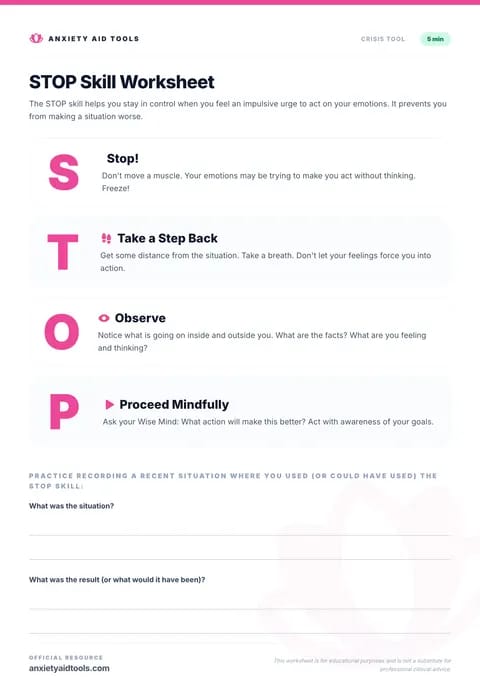
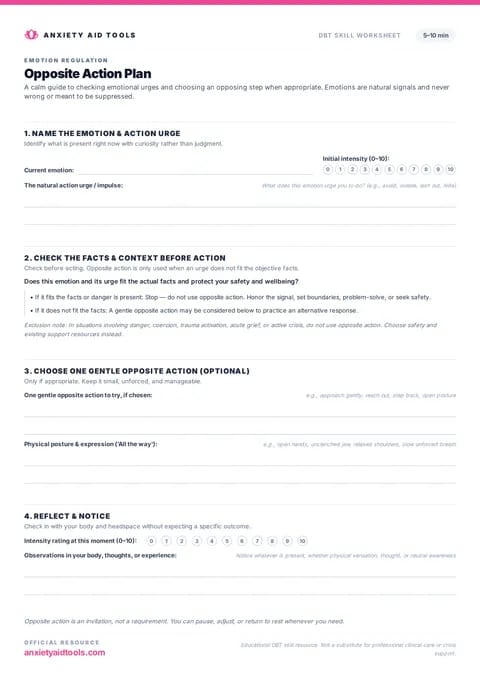
Research & References

  • Linehan, M. M. (2014). DBT Skills Training Manual. Guilford Press.