
Depression Anxiety Stress Scales (DASS-21)
A brief self-assessment that screens recent depression, anxiety, and stress symptoms across three separate subscales.
Who Is This Test For?
The DASS-21 is for adults who want a brief snapshot of recent depression, anxiety, and stress symptoms.
- People wanting one screen across mood, anxiety, and stress
- Anyone tracking symptoms over the past week
- People comparing which symptom area feels most elevated
- Anyone preparing to discuss symptoms with a professional
Please read each statement and indicate how much it applied over the past week.
I found it hard to wind down
I was aware of dryness of my mouth
I couldn’t seem to experience any positive feeling at all
I experienced breathing difficulty (e.g., excessively rapid breathing, breathlessness in the absence of physical exertion)
I found it difficult to work up the initiative to do things
I tended to over-react to situations
I experienced trembling (e.g., in the hands)
I felt that I was using a lot of nervous energy
I was worried about situations in which I might panic and make a fool of myself
I felt that I had nothing to look forward to
I found myself getting agitated
I found it difficult to relax
I felt down-hearted and blue
I was intolerant of anything that kept me from getting on with what I was doing
I felt I was close to panic
I was unable to become enthusiastic about anything
I felt I wasn’t worth much as a person
I felt that I was rather touchy
I was aware of the action of my heart in the absence of physical exertion (e.g., sense of heart rate increase, heart missing a beat)
I felt scared without any good reason
I felt that life was meaningless
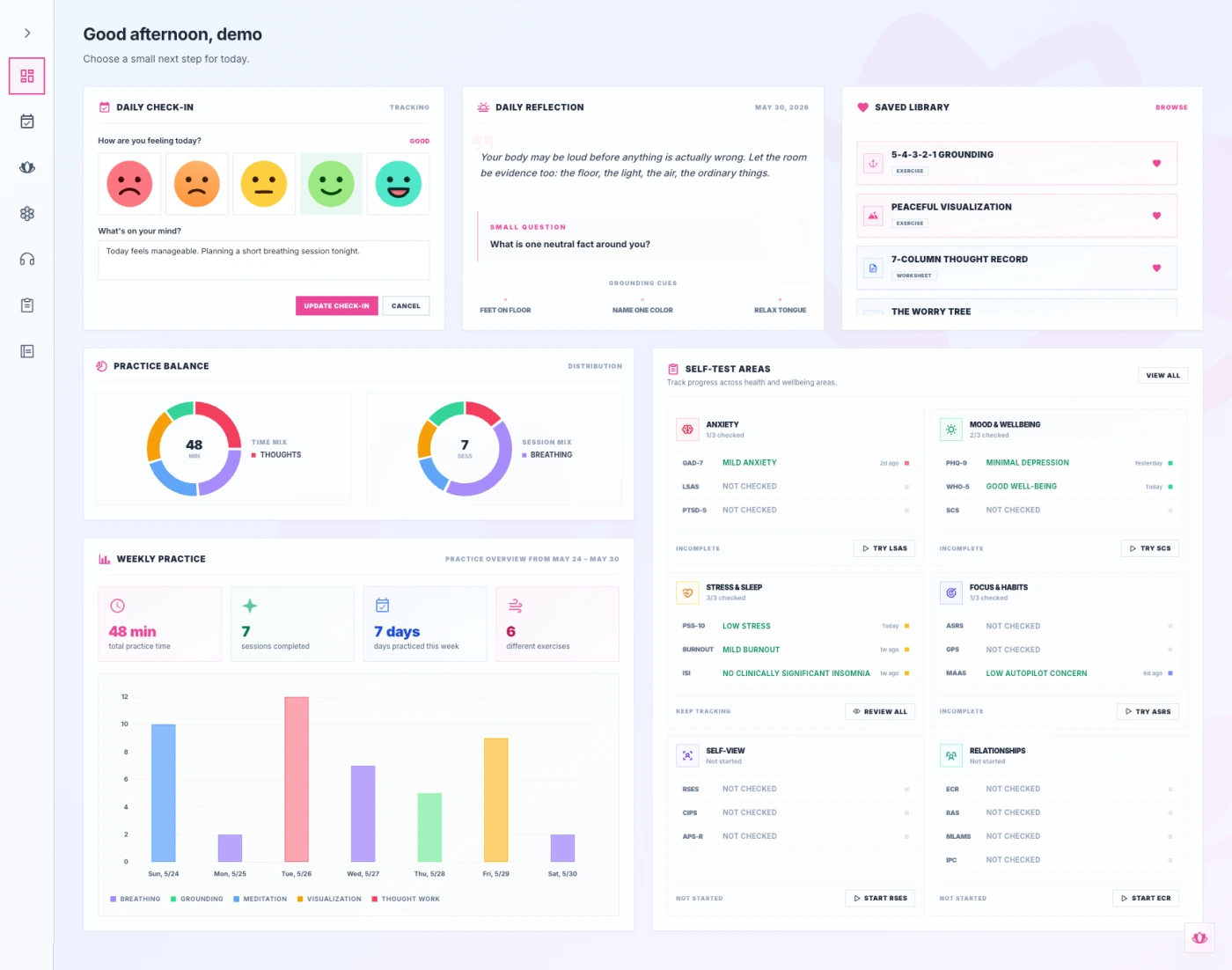
Turn self-test results into a clearer next step.
Save your results, watch changes over time, and find relevant tools when you need a next step.
- Save your history
- Track changes over time
- Find relevant tools
Retake tests over time to see what changes.
Good To Know

Match support to the highest subscale
Low mood may need activation and connection; anxiety may need grounding; stress may need load reduction and recovery.

Lower arousal before problem-solving
When anxiety and stress are high, calm the body first, then choose the next practical step.

Do not wait for perfect motivation
Small scheduled actions are often more reliable than waiting to feel ready.
Understanding the DASS-21
T he DASS-21 is the validated short form of the original 42-item Depression Anxiety Stress Scales.
Each subscale has seven items scored from 0 to 3; raw subscale totals are multiplied by 2 to align with DASS-42 severity norms.
The overall result shown here uses the highest severity among the three interpreted subscale scores, with ties resolved by the higher interpreted score.
DASS materials are provided by UNSW and may be copied from the official DASS site; this page cites the official source and is for self-assessment, not diagnosis.
Frequently Asked Questions
Does the DASS-21 diagnose conditions?
No. It is a screening and self-assessment tool, not a diagnosis.
Why are scores multiplied by 2?
DASS-21 is the short form of DASS-42, so each subscale raw score is doubled to use DASS-42 severity ranges.
How is it different from PHQ-9, GAD-7, or PSS-10?
PHQ-9 focuses on depression, GAD-7 on generalized anxiety, and PSS-10 on perceived stress. DASS-21 screens depression, anxiety, and stress separately.
Why is there no average marker?
There is no single authoritative population average that applies cleanly to all three DASS-21 subscales.
What should I do with severe scores?
Consider professional support. If you may harm yourself or cannot stay safe, contact emergency services or a crisis line now.
More Tests


This self-assessment is not diagnostic and cannot replace a professional evaluation. Elevated DASS-21 scores should be interpreted cautiously. If you are in crisis, may harm yourself, or cannot stay safe, contact emergency services or a crisis line now.